
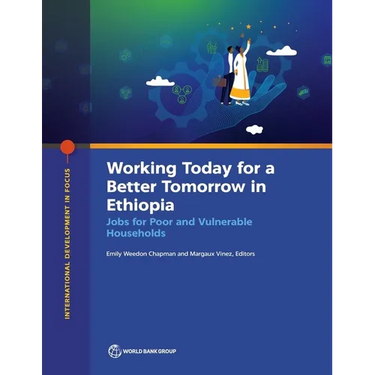

Working Today for a Better Tomorrow in Ethiopia - Paperback
 Working Today for a Better Tomorrow in Ethiopia - Paperback
$88.23
/
Working Today for a Better Tomorrow in Ethiopia - Paperback
$88.23
/

products.product.pickup_availability.unavailable

Your payment information is processed securely. We do not store credit card details nor have access to your credit card information.


by Emily Weedon Chapman (Editor), Margaux Vinez (Editor)
Ethiopia has long prioritized creating more and better jobs as core to its sustainable and inclusive development. However, steady growth in the gross domestic product and gains in agricultural productivity in recent decades have not translated into better opportunities nor increased earnings for much of the population. The 2021 Labor Force Survey data reveal labor trends since 1999 and underscore these realities. Moreover, COVID-19 and other shocks have reinforced the disconnect between positive macroeconomic trends at a national level and stagnant incomes at the household level.
Working Today for a Better Tomorrow in Ethiopia: Jobs for Poor and Vulnerable Households outlines how Ethiopia can leverage its social safety
net programs to help poor and vulnerable workers earn more in today's labor market. The government's latest development planning policies focus on private sector growth and structural transformation to create more and better jobs. While these long-term reforms take hold, the jobs agenda also must include near-term measures to improve worker productivity in and connect people to jobs that already exist. Complementing cash transfers with capital, training, and other services can help workers earn more in their current work, diversify into new types of employment, or connect to available wage jobs.These investments can have an immediate impact for poor people in Ethiopia while also contributing to sustainable and inclusive development.
Author Biography
The World Bank came into formal existence in 1945 following the international ratification of the Bretton Woods agreements. It is a vital source of financial and technical assistance to developing countries around the world. The organization's activities are focused on education, health, agriculture and rural development, environmental protection, establishing and enforcing regulations, infrastructure development, governance and legal institutions development. The World Bank is made up of two unique development institutions owned by its 185 Member Countries. The International Bank for Reconstruction and Development (IBRD) focuses on middle income and creditworthy poor countries and the International Development Association (IDA), which focuses on the poorest countries in the world.

