
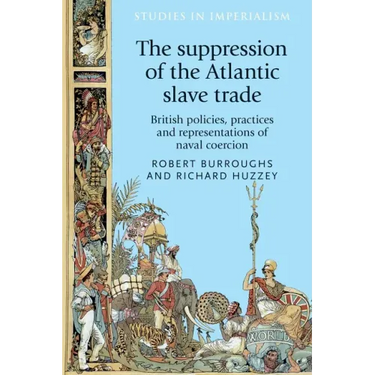

The Suppression of the Atlantic Slave Trade: British Policies, Practices and Representations of Naval Coercion - Paperback
 The Suppression of the Atlantic Slave Trade: British Policies, Practices and Representations of Naval Coercion - Paperback
$85.57
/
The Suppression of the Atlantic Slave Trade: British Policies, Practices and Representations of Naval Coercion - Paperback
$85.57
/

products.product.pickup_availability.unavailable

Your payment information is processed securely. We do not store credit card details nor have access to your credit card information.


by Robert Burroughs (Editor), Richard Huzzey (Editor)
The suppression of the Atlantic slave trade saw the British Empire turn naval power and moral outrage against a branch of commerce it had done so much to promote. The assembled authors bridge the gap between ship and shore to reveal the motives, effects, and legacies of this nineteenth-century campaign.
Front Jacket
The suppression of the Atlantic slave trade saw the British Empire turn naval power and moral outrage against a branch of commerce it had previously done much to promote. The assembled authors bridge the gap between ship and shore to reveal the motives, effects and legacies of this nineteenth-century campaign. As the first academic study of Britain's efforts to suppress the Atlantic slave trade in more than thirty years, the book gathers experts in history, literature, historical geography, museum studies and the history of medicine to re-examine naval suppression in light of recent work on slavery and empire. Three sections reveal the policies, experiences and representations of slave-trade suppression from the perspectives of metropolitan Britons, liberated Africans, black sailors, colonialists and naval officers. A collaborative endeavor, this new history of the slave trade offers striking conclusions about the importance of African personnel in sustaining the Royal Navy's operations, as well as a case study of liberated slaves' experiences of 'freedom', critical readings of the public and private literature of suppression, and an innovative analysis of the commemoration of the anti-slavery squadron during Britain's 2007 bicentennial of abolition. These social, political and cultural studies of naval suppression will inform our understanding of imperial history, the Atlantic world, slavery and abolition, whether introducing the campaign to new audiences or encouraging scholars to reconsider it afresh.
Back Jacket
The suppression of the Atlantic slave trade saw the British Empire turn naval power and moral outrage against a branch of commerce it had previously done much to promote. The assembled authors bridge the gap between ship and shore to reveal the motives, effects and legacies of this nineteenth-century campaign. As the first academic study of Britain's efforts to suppress the Atlantic slave trade in more than thirty years, the book gathers experts in history, literature, historical geography, museum studies and the history of medicine to re-examine naval suppression in light of recent work on slavery and empire. Three sections reveal the policies, experiences and representations of slave-trade suppression from the perspectives of metropolitan Britons, liberated Africans, black sailors, colonialists and naval officers.
A collaborative endeavor, this new history of the slave trade offers striking conclusions about the importance of African personnel in sustaining the Royal Navy's operations, as well as a case study of liberated slaves' experiences of 'freedom', critical readings of the public and private literature of suppression, and an innovative analysis of the commemoration of the anti-slavery squadron during Britain's 2007 bicentennial of abolition. These social, political and cultural studies of naval suppression will inform our understanding of imperial history, the Atlantic world, slavery and abolition, whether introducing the campaign to new audiences or encouraging scholars to reconsider it afresh.Author Biography
Robert Burroughs is Senior Lecturer in English Literature at Leeds Beckett University
Richard Huzzey is Reader in History at Durham University
