
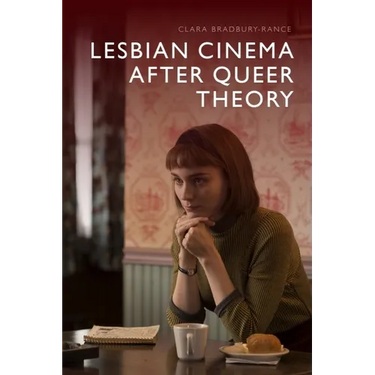

Lesbian Cinema After Queer Theory - Paperback
 Lesbian Cinema After Queer Theory - Paperback
$58.21
/
Lesbian Cinema After Queer Theory - Paperback
$58.21
/

products.product.pickup_availability.unavailable

Your payment information is processed securely. We do not store credit card details nor have access to your credit card information.


by Clara Bradbury-Rance (Author)
Headline: A study of spectatorship, desire, identification and identity
Blurb: Lesbianism has received unprecedented screen time in the first decades of the twenty-first century, departing from a prior invisibility which historically was interrupted only by invocations of pathologisation, isolation and tragedy. The lesbian's delayed and uneasy path towards visibility has coincided with queer theory's disruption of sexual identity categories, resulting in a comparable invisibility in the critical discourse that might have accounted for such significant representational transformations. In this paradoxical context, Troubling Visibility: The Queerness of Lesbian Cinema theorises the kinds of cinematic language through which desire can be given visual form. Scrutinising the conflations and obscurations induced by legitimacy when sexuality is made visible through sex, the book proposes a feminist framework for understanding the queerness of lesbianism that unsettles the "visibility imperative". Rather than charting a narrative of representational progress, shoring up the lesbian's categorisation in the newly available terms of the visible, the book reads contemporary cinema through the theories of sexuality that problematise lesbian legibility itself.
Key Features:
Analyses contemporary films in the context of long-standing theoretical debates and representational paradigmsIntervenes in questions of visibility, progress and identity politicsExplores lesbian cinema in the context of political, social and cultural transformations in LGBTQ+ civil rights in the twenty-first centuryProposes the mutual, rather than synonymous, use of "queer" and "lesbian" to describe sexuality on screenBrings together psychoanalysis, affect theory and theories of space and time to explore the range of ways in which contemporary cinema makes desire legible
Subject: Film Studies
Front Jacket
Lesbian Cinema after Queer Theory By Clara Bradbury-Rance The unprecedented increase in lesbian representation over the past two decades has, paradoxically, coincided with queer theory's radical transformation of the study of sexuality. Lesbian Cinema after Queer Theory argues that this contradictory context has yielded new kinds of cinematic language through which to give desire visual form. By offering close readings of key contemporary films such as Blue Is the Warmest Colour, Water Lilies and Carol alongside a broader filmography encompassing over three hundred other films released between 1927 and 2018, the book provokes new ways of understanding a changing field of representation. Author Clara Bradbury-Rance resists charting a narrative of representational progress or shoring up lesbian categorisation in the newly available terms of the visible. Instead, she argues for a feminist framework that can understand lesbianism's queerness. Drawing on a provocative theoretical and visual corpus, Lesbian Cinema after Queer Theory reveals the conditions of lesbian legibility in the twenty-first century. Clara Bradbury-Rance is an Early Career Fellow in Liberal Arts at King's College London. Her research focuses on the intersectional study of sexuality and gender in film, popular culture and new media.
Author Biography
Clara Bradbury-Rance is a Lecturer in the Department of Liberal Arts at King's College London.

