
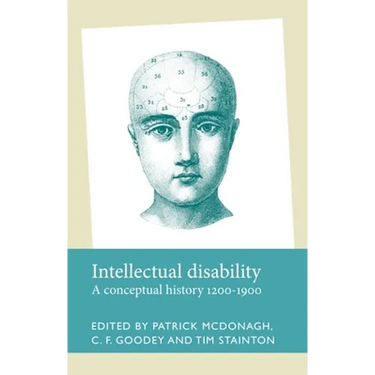

Intellectual Disability: A Conceptual History, 1200-1900 - Paperback
 Intellectual Disability: A Conceptual History, 1200-1900 - Paperback
$71.89
/
Intellectual Disability: A Conceptual History, 1200-1900 - Paperback
$71.89
/

products.product.pickup_availability.unavailable

Your payment information is processed securely. We do not store credit card details nor have access to your credit card information.


by Patrick McDonagh (Editor), C. F. Goodey (Editor), Timothy Stainton (Editor)
This collection explores the historical origins of our modern concepts of intellectual or learning disability. The essays, from some of the leading historians of ideas of intellectual disability, focus on British and European material from the Middle Ages to the late-nineteenth century and extend across legal, educational, literary, religious, philosophical and psychiatric histories. They investigate how precursor concepts and discourses were shaped by and interacted with their particular social, cultural and intellectual environments, eventually giving rise to contemporary ideas. Intellectual disability is essential reading for scholars interested in the history of intelligence, intellectual disability and related concepts, as well as in disability history generally.
Back Jacket
This collection explores how concepts of intellectual disability evolved from a range of influences, eventually converging with earlier and decidedly distinct ideas, including 'idiocy' and 'folly', which were themselves generated by very specific social and intellectual environments.
The book brings together essays from some of the leading historians of ideas of intellectual disability, and extends across legal, educational, literary, religious, philosophical, and psychiatric histories. Maintaining a rigorous distinction between historical and contemporary concepts, it demonstrates how intellectual disability and related notions were products of the prevailing social, cultural and intellectual environments in which they took form, and also shows how they performed important functions within these environments. Focusing on British and European material from the Middle Ages to the late-nineteenth century, the collection asks 'how and why did these concepts form?' 'how did they connect with one another?' and 'what historical circumstances contributed to building these connections?' But, while the essays focus on the forces shaping ideas of intelligence and disability, they also address the consequences of these defining forces for the people who found themselves enclosed by the shifting definitional field. Intellectual disability is essential reading for scholars interested in the history of intelligence, intellectual disability and related concepts, as well as in disability and social history generally.Author Biography
Patrick McDonagh is a faculty member in the Department of English at Concordia University, Montreal and co-founder of the Spectrum Society for Community Living in Vancouver
C. F. Goodey is Honorary Fellow in the Centre for Medical Humanities at the University of Leicester Tim Stainton is Professor in the School of Social Work and Director of the Centre for Inclusion and Citizenship at the University of British Columbia, Vancouver
