
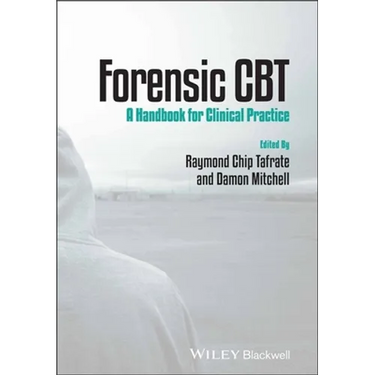

Forensic CBT: A Handbook for Clinical Practice - Paperback
 Forensic CBT: A Handbook for Clinical Practice - Paperback
$97.65
/
Forensic CBT: A Handbook for Clinical Practice - Paperback
$97.65
/

products.product.pickup_availability.unavailable

Your payment information is processed securely. We do not store credit card details nor have access to your credit card information.


by Raymond Chip Tafrate (Editor), Damon Mitchell (Editor)
Forensic CBT: A Handbook for Clinical Practice is an edited collection that represents the first authoritative resource on the utilization of CBT strategies and techniques for offender clients.
- Features contributions from leaders of the major schools of CBT on the treatment of antisocial personality patterns as well as anger, interpersonal violence, substance abuse, and sexual aggression
- Addresses modified CBT approaches for female, juvenile, and culturally diverse forensic populations
- Covers emerging areas of forensic practices, including the integration of motivational interviewing and strength-based approaches
- Includes an assortment of worksheets, handouts, and exercises for practitioners to use with their clients
Front Jacket
"Forensic CBT: A Handbook for Clinical Practice is a superb collection that will be of immense value to practitioners who work with this challenging group of people. Leading contributors from the CBT approaches have written excellent chapters that will be immediately helpful, striking just the right balance between scholarship and practical application. There is an awareness of the specific challenges in working with offenders--distrust, lack of motivation, history of problems, lack of social support, stigmatization--and, importantly, how to overcome them. I highly recommend this important volume to anyone working in the forensic area."
Robert L Leahy, Director, American Institute for Cognitive Therapy, New York, NY, USA
"This handbook is long overdue as it fills a glaring void in forensic and correctional treatment. With its application of CBT to an array of offenders and their conditions, it elucidates the 'forgotten R' (responsivity) in the RNR model of effective correctional intervention."
Stephen Wormith, University of Saskatchewan, Canada
"Incisive, comprehensive, scholarly, and practical - Tafrate and Mitchell's Forensic CBT is an impressive body of work, with contributions from leaders in the field integrating innovations in applied research and clinical practice for cognitive behavioral approaches with forensic clientele."
Mark Olver, University of Saskatchewan, Canada
With the current correctional population in the United States approaching 2 million--and a probation population of more than 5 million--there is an increasing demand for effective behavioral and emotional health services from forensic practitioners. Forensic CBT: A Handbook for Clinical Practice represents the first authoritative resource on the utilization of Cognitive-Behavioral Therapy (CBT) strategies and techniques for a wide variety of justice-involved clients.
Contributions from leading experts in the major schools of CBT offer practical guidance on the treatment of antisocial personality patterns, anger, interpersonal violence, substance abuse, and sexual aggression. This practical guidance is supplemented by an assortment of worksheets, handouts, and exercises for practitioners to use with their clients. Coverage is also included on the use of modified CBT strategies for female, juvenile, and culturally diverse forensic populations; as well as emerging areas of forensic practices. Forensic treatment is presented from a wide spectrum of CBT approaches including Beck and Ellis, Acceptance and Commitment Therapy, Schema Focused Therapy, and criminal thinking models. Forensic CBT is an invaluable resource for practitioners working with juvenile and adult offenders in various criminal justice settings, both within institutions and in the community.
Back Jacket
"Forensic CBT: A Handbook for Clinical Practice is a superb collection that will be of immense value to practitioners who work with this challenging group of people. Leading contributors from the CBT approaches have written excellent chapters that will be immediately helpful, striking just the right balance between scholarship and practical application. There is an awareness of the specific challenges in working with offenders--distrust, lack of motivation, history of problems, lack of social support, stigmatization--and, importantly, how to overcome them. I highly recommend this important volume to anyone working in the forensic area."
Robert L Leahy, Director, American Institute for Cognitive Therapy, New York, NY, USA
"This handbook is long overdue as it fills a glaring void in forensic and correctional treatment. With its application of CBT to an array of offenders and their conditions, it elucidates the 'forgotten R' (responsivity) in the RNR model of effective correctional intervention."
Stephen Wormith, University of Saskatchewan, Canada
"Incisive, comprehensive, scholarly, and practical - Tafrate and Mitchell's Forensic CBT is an impressive body of work, with contributions from leaders in the field integrating innovations in applied research and clinical practice for cognitive behavioral approaches with forensic clientele."
Mark Olver, University of Saskatchewan, Canada
With the current correctional population in the United States approaching 2 million--and a probation population of more than 5 million--there is an increasing demand for effective behavioral and emotional health services from forensic practitioners. Forensic CBT: A Handbook for Clinical Practice represents the first authoritative resource on the utilization of Cognitive-Behavioral Therapy (CBT) strategies and techniques for a wide variety of justice-involved clients.
Contributions from leading experts in the major schools of CBT offer practical guidance on the treatment of antisocial personality patterns, anger, interpersonal violence, substance abuse, and sexual aggression. This practical guidance is supplemented by an assortment of worksheets, handouts, and exercises for practitioners to use with their clients. Coverage is also included on the use of modified CBT strategies for female, juvenile, and culturally diverse forensic populations; as well as emerging areas of forensic practices. Forensic treatment is presented from a wide spectrum of CBT approaches including Beck and Ellis, Acceptance and Commitment Therapy, Schema Focused Therapy, and criminal thinking models. Forensic CBT is an invaluable resource for practitioners working with juvenile and adult offenders in various criminal justice settings, both within institutions and in the community.
Author Biography
Raymond Chip Tafrate is a licensed psychologist and Professor and Chairperson of the Criminology and Criminal Justice Department at Central Connecticut State University. His most recent books are Anger Management for Everyone (2009) and Understanding Anger Disorders (2006).
Damon Mitchell is a licensed psychologist and Professor in the Department of Criminology and Criminal Justice at Central Connecticut State University. His research has been published in a variety of psychology and criminal justice journals including the International Journal of Offender Therapy and Comparative Criminology, Journal of Criminal Justice, and the Journal of Interpersonal Violence.

