
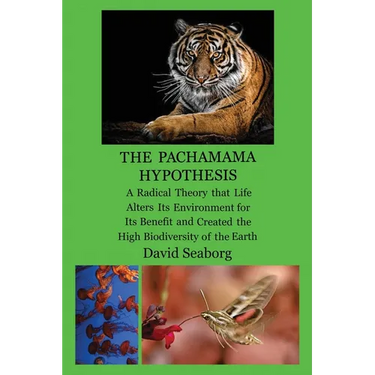

THE PACHAMAMA HYPOTHESIS A Radical Hypothesis that Life Alters its Environment for its Benefit and Created the High Biodiversity of the Glorious Green - Paperback
 THE PACHAMAMA HYPOTHESIS A Radical Hypothesis that Life Alters its Environment for its Benefit and Created the High Biodiversity of the Glorious Green - Paperback
$39.40
/
THE PACHAMAMA HYPOTHESIS A Radical Hypothesis that Life Alters its Environment for its Benefit and Created the High Biodiversity of the Glorious Green - Paperback
$39.40
/

products.product.pickup_availability.unavailable

Your payment information is processed securely. We do not store credit card details nor have access to your credit card information.


by David Seaborg (Author)
This book presents an exciting, original hypothesis that states that
ecosystems maximize biodiversity, that all species improve their
ecosystem for life and biodiversity under natural conditions, and
that life made Earth better for living organisms. Symbiosis is far
more important than recognized. Predators and their prey are
actually in a symbiotic relationship, since the prey species benefits
by being regulated by the predator and hence not destroying its
environment. DNA has an inherent tendency to become variable
and occasionally promote great adaptive evolutionary change,
which leads to spectacular diversification into many new species.
The reader of this fascinating book will become well versed in
current evolutionary and ecological theory. It is a must read for
anyone interested in the new biology of today.
In discussions with Seaborg before this book was written,
Harvard evolutionary biologist Edward O. Wilson found
Seaborg's hypothesis of merit and interesting. James Lovelock, co-author
of the Gaia Hypothesis, encouraged Seaborg to pursue his hypothesis.

