
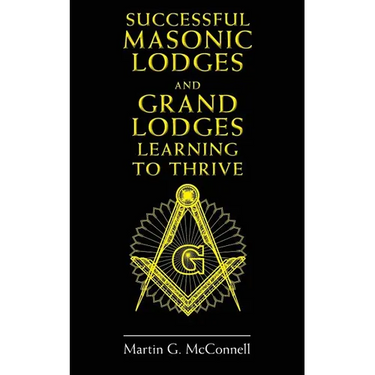

Successful Masonic Lodges and Grand Lodges Learning To Thrive - Paperback
 Successful Masonic Lodges and Grand Lodges Learning To Thrive - Paperback
$24.48
/
Successful Masonic Lodges and Grand Lodges Learning To Thrive - Paperback
$24.48
/

products.product.pickup_availability.unavailable

Your payment information is processed securely. We do not store credit card details nor have access to your credit card information.


by Martin G. McConnell (Author)
Martin G. McConnell is an active Freemason who has held several different positions with the grand lodge. He brings that expertise to his new guide, which highlights much-needed changes in the organizational structure of both Masonic lodges and grand lodges.
McConnell understands the importance of keeping tradition alive but also acknowledges the need to accept change and growth. Membership for Masonic lodges is declining, and leadership has become tied up in overly complicated bureaucracy. There needs to be significant organizational change at every level. McConnell presents his own views on the evolution of Freemasonry and the best ways to implement new policies and procedures. His innovative guide includes the following:
- An explanation of the history and organization of the Masonic order
- New ways of improving member recruitment techniques and promoting attendance
- A discussion of the development of grand lodges and their need to reconnect with lodges and Masons
- Insight into cutting through the bureaucracy
- Innovative ways to promote change and growth within the organization
In addition to his perspective on fostering change within Freemasonry, McConnell also includes a series of essays about the history, traditions, and mythology of the lodges. He traces Freemasonry from its beginnings to its bright future!
Author Biography
Martin G. McConnell is an active Freemason and has held several grand lodge positions. He has trained other officers and contributed to discourse on lodge and grand lodge development. He has also passed this love of Freemasonry on to his son, Lorin.
McConnell received his bachelor's degree in history and psychology and his master's degree in psychology and administration. He spent his career in executive university hospital management in both the United States and Canada and in private business.

