
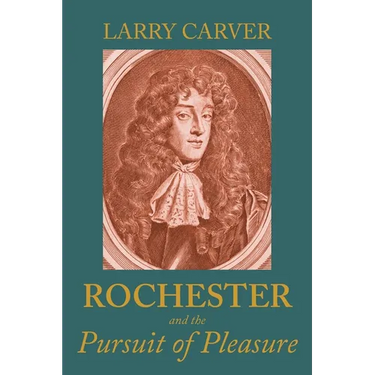

Rochester and the Pursuit of Pleasure - Paperback
 Rochester and the Pursuit of Pleasure - Paperback
$70.18
/
Rochester and the Pursuit of Pleasure - Paperback
$70.18
/

products.product.pickup_availability.unavailable

Your payment information is processed securely. We do not store credit card details nor have access to your credit card information.


by Larry D. Carver (Author)
Rochester and the pursuit of pleasure provides a reading of Rochester's poems, dramatic works, and letters in a biographical context. In doing so, it sheds light on a central vexed issue in Rochester criticism, the relationship of the poet to his speaker. It also reveals that Rochester's work clusters about a central theme, the pursuit of pleasure, a pursuit motivated by a courtship of purity that grew out of Rochester's Christian and God-fearing upbringing. This rhetoric of courtship, in turn, reveals the unity of Rochester's work as the courtier and his various personae try to persuade his audiences, secular and divine, of his worth.
Back Jacket
Rochester and the pursuit of pleasure, the fourth full-length study of Rochester's work since David Vieth's pioneering edition of The Compete Poems (1968), is the first to bring together a reading of John Wilmot's poetry, dramatic works, and letters.
The book provides a reading of Rochester's work in a biographical context. Though a biographical interpretation is fraught with risks, theoretically and in terms of the surviving literary and biographical material, in doing so, Carver shows the role that biography plays in interpreting Rochester's work and illuminates a central problem in Rochester criticism: the relationship of poet to his speakers. This in turn reveals that Rochester's works cluster about a central theme - the pursuit of pleasure - a complex process in which many of Rochester's mid-seventeenth century contemporaries were engaged. No longer sure under the old dispensation of their duties - familial, political, religious, or artistic - they sought new grounds for their motivations. For Rochester this pursuit of pleasure has its roots in Christianity. Rochester's work reflects his Christian and God-fearing upbringing and provides evidence of an excessive preoccupation with, and, at the end of his life, acceptance of Christianity. As the various speakers and Rochester himself pursue pleasure by courting king, wife, mistresses, and the craft of writing, they in humorous, perverse, and even criminal ways court God.Author Biography
Larry Carver is Professor Emeritus in the Department of English at the University of Texas at Austin.

