
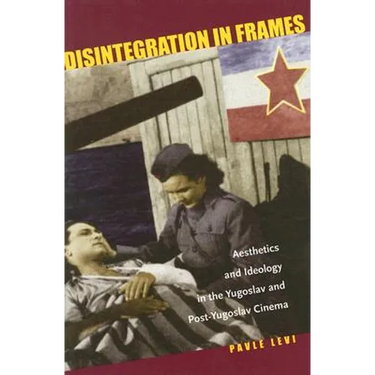

Disintegration in Frames: Aesthetics and Ideology in the Yugoslav and Post-Yugoslav Cinema - Hardcover
 Disintegration in Frames: Aesthetics and Ideology in the Yugoslav and Post-Yugoslav Cinema - Hardcover
$109.60
/
Disintegration in Frames: Aesthetics and Ideology in the Yugoslav and Post-Yugoslav Cinema - Hardcover
$109.60
/

products.product.pickup_availability.unavailable

Your payment information is processed securely. We do not store credit card details nor have access to your credit card information.


by Pavle Levi (Author)
Disintegration in Frames explores the relationship between aesthetics and ideology in the Yugoslav and post-Yugoslav cinema, with emphasis on issues of nationalism, internationalism, and interethnic relations.
Front Jacket
Disintegration in Frames examines the ways in which national identity and interethnic relations are approached, evaluated, and critically dissected in films by directors such as Dusan Makavejev, Emir Kusturica, and Srdan Dragojevic; subcultural television and musical performances of the Bosnian pop-art movement New Primitivism; amateur video works made by the returning veterans of the Croatian war; political documentaries chronicling the psychological effects of state socialism; and more.
Back Jacket
Disintegration in Frames examines the ways in which national identity and interethnic relations are approached, evaluated, and critically dissected in films by directors such as Dusan Makavejev, Emir Kusturica, and Srdan Dragojevic; subcultural television and musical performances of the Bosnian pop-art movement New Primitivism; amateur video works made by the returning veterans of the Croatian war; political documentaries chronicling the psychological effects of state socialism; and more.
Author Biography
Pavle Levi is Assistant Professor of Film Studies at Stanford University.

